
From Craftsman Trap to Scalable Business: How Captain Closet Is Building a High-Value Brand
The Trap Most Skilled Business Owners Fall Into
If you’re great at what you do—but your business still feels stuck—you’re not alone.
Evan Chappell, owner of Captain Closet, learned this the hard way.
He started as a skilled carpenter. Built high-quality work. Took pride in craftsmanship.
And still failed.
Why?
Because he was focused on the product—not the customer, not the business, and not the system.
This is what he calls the “craftsman trap.”
And it’s where most service-based business owners get stuck.
The Craftsman Trap: Why Skill Alone Won’t Scale
Evan’s first business failed because he believed:
If the product is great, customers will come
If customers come, the business will grow
If the work is good, everything else will work itself out
That mindset is common—and dangerous.
The Reality:
Customers don’t buy craftsmanship.
They buy:
Convenience
Speed
Trust
Communication
Certainty
Evan said it best:
“You’re solving their problems—not your own.”
That shift—from ego-driven work to customer-driven value—is what changed everything.
The Pivot: From Carpenter to Business Owner
When Evan restarted during COVID, he didn’t just launch another business.
He changed his identity.
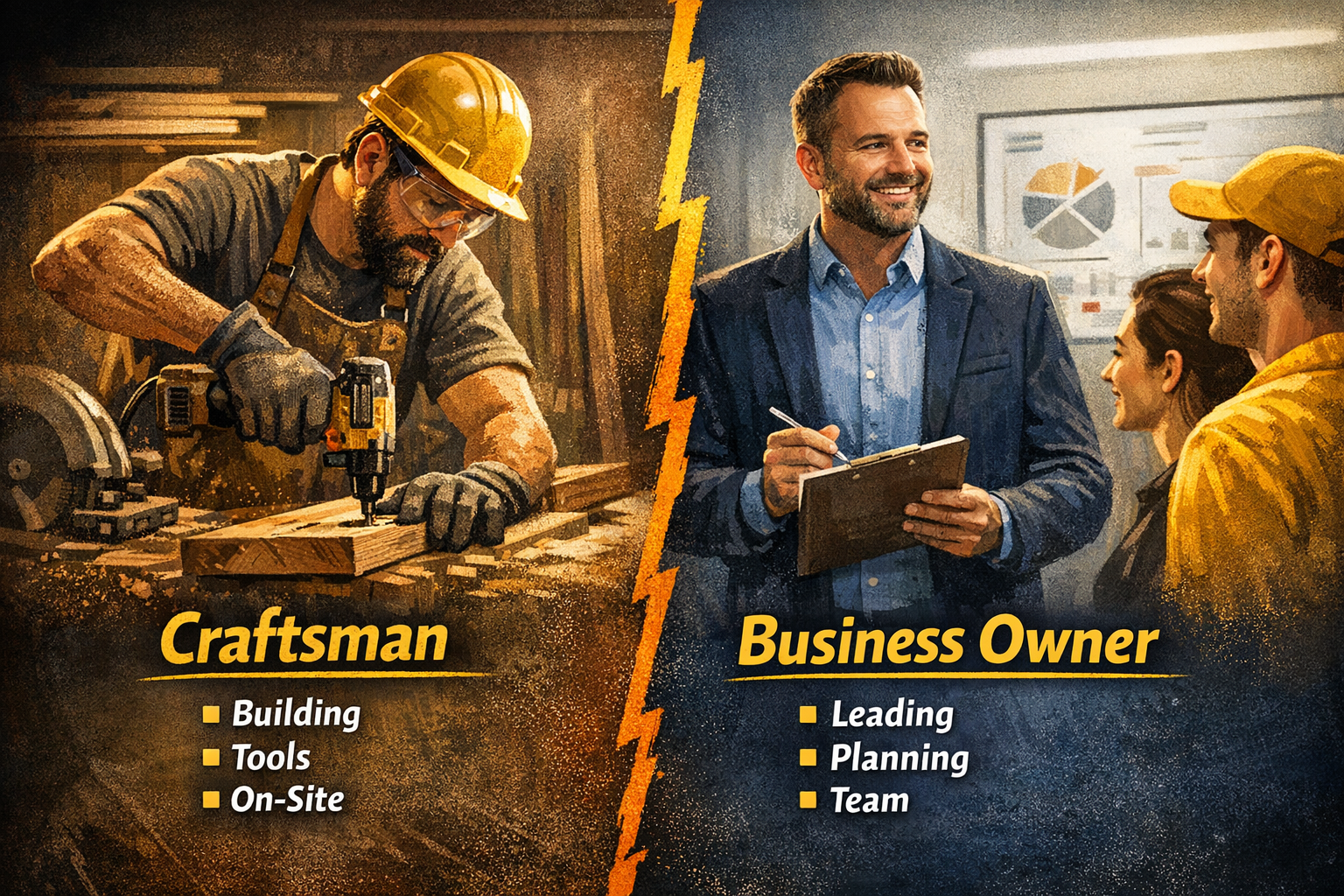
Old Identity:
Craftsman first
Business owner second
New Identity:
Business owner first
Craftsman second
That one shift impacts everything:
Pricing
Marketing
Hiring
Customer experience
Growth potential
Because if the business doesn’t survive, nothing else matters.
The Real Product: It’s Not the Closet
Captain Closet doesn’t just sell closet systems.
They sell:
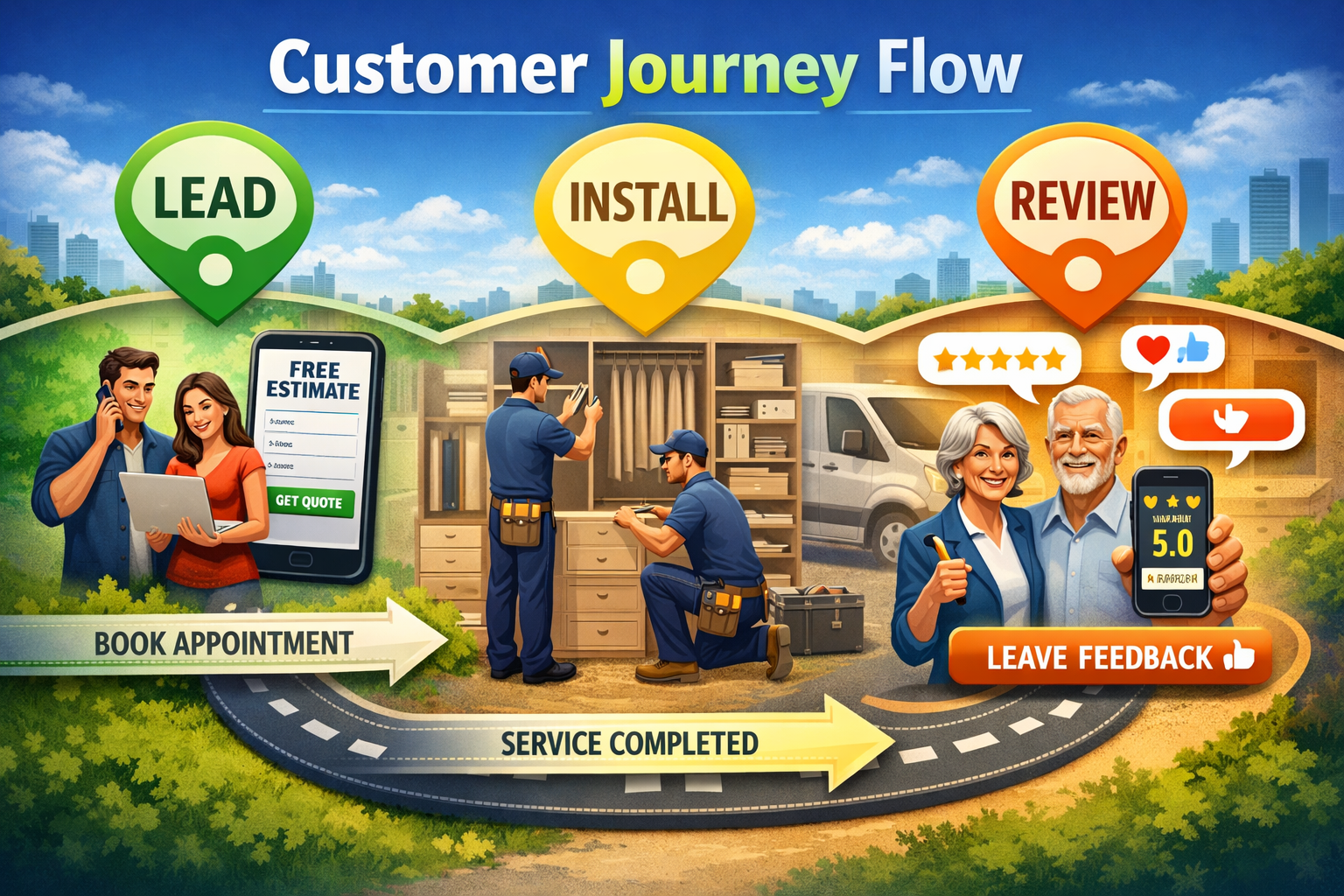
Fast turnaround
Easy process
Clear communication
Reliability
A personal experience
Evan highlighted something most owners miss:
Two identical closets can produce completely different reviews.
Why?
Because the experience—not the product—drives perceived value.
What Makes Captain Closet Different
In a market dominated by large franchise companies, Captain Closet wins on:
1. Personal Connection
Customers work directly with the owner—not a sales rep.
2. Simplicity
No complicated showroom process. Quick decisions. Clear outcomes.
3. Speed
Customers don’t want to wait months—they want solutions now.
4. Accountability
If something goes wrong, Evan owns it—personally.
That combination builds trust fast.
Marketing That Actually Works (Without Big Budgets)
Evan isn’t running massive ad campaigns.
Instead, he focuses on:
Google Business Profile updates
Organic search visibility
Basic website with clear conversion
Consistent (but simple) social posting
Door hangers for local awareness
Result:
90% of leads come from organic Google searches.
Key Lesson:
You don’t need complex marketing.
You need:
Visibility
Consistency
Clarity
The Biggest Growth Constraint: Wearing All the Hats
Right now, Evan is doing:
Sales
Installations
Marketing
Operations
Customer service
That’s normal in early stages.
But it’s also the biggest bottleneck.
His Workload:
40 hours “in” the business
20+ hours “on” the business
That imbalance slows growth.
If you're a business owner looking to scale your company, learn more about our Business Coaching Program in Virginia.
The Turning Point: Forced Delegation
When Evan injured his knee and couldn’t drive for 3 months, everything changed.
He had no choice but to:
Hire subcontractors
Delegate installations
Focus on coordination and strategy
Result:
He started stepping into true business ownership.
Key Insight:
Sometimes growth doesn’t come from planning—it comes from necessity.
Hiring: Where the Real Game Is Won
Evan identified a critical truth:
“Finding good people—that’s where the game is at.”
Especially in home services, where team members:
Enter customers’ homes
Represent your brand directly
Impact trust instantly
His Hiring Approach:
Use local Facebook groups
Be transparent upfront
Evaluate personality and fit—not just skill
The Future Vision: Scaling to $3M+
Evan’s 3–5 year goals:
2–3 installation crews
$3M+ revenue
Strong local brand recognition
Known for speed, simplicity, and trust
But he also recognizes the biggest constraint:
“I’m the limiting factor.”
That awareness is what enables growth.
The One Lever That Changes Everything: Logistics
If Evan could fix one thing tomorrow:
Supply chain and logistics
Why?
Because reducing install time from:
6–8 weeks → 2–3 weeks
Would instantly:
Increase conversions
Improve customer satisfaction
Boost capacity
Accelerate revenue
The Value Equation That Changed His Thinking
One of the biggest breakthroughs came from learning about value:
Customers pay based on perceived value—not just the product.
That includes:
Communication
Speed
Trust
Ease
Reliability
If you improve those, you can:
Charge more
Close more deals
Get better reviews
Key Takeaways for Business Owners
1. Stop Building for Yourself
Build for the customer’s problem—not your pride.
2. Focus on the Experience
The product is expected. The experience is what differentiates.
3. Delegate Sooner Than You Think
Holding onto everything slows growth.
4. Simplicity Wins in Marketing
You don’t need complexity—just consistency.
5. Take Responsibility for Everything
Blame yourself → improve faster.
FAQs
1. What is the “craftsman trap”?
It’s when business owners focus only on their craft and ignore business fundamentals like marketing, sales, and systems.
2. How do I get more leads without ads?
Focus on Google Business Profile, SEO, and consistent local visibility.
3. When should I start hiring?
As soon as your time becomes the bottleneck—don’t wait until burnout.
4. What drives customer satisfaction most?
Communication, reliability, and speed—not just the final product.
5. How do I increase perceived value?
Improve the full customer experience, not just what you deliver.
If you’re tired of doing everything yourself and ready to build a business that actually scales…
It’s time to step out of the craftsman role—and into leadership.